AI in Warfare: How Artificial Intelligence and Drones Are Changing Modern Battlefields

Artificial Intelligence (AI) is rapidly transforming the way wars are fought. From autonomous drones and intelligent surveillance systems to AI-assisted targeting and cyber warfare, modern militaries are increasingly relying on algorithms and machines rather than traditional manpower.
Conflicts around the world—including tensions involving the United States and Iran, the Russia-Ukraine war, and fighting in Gaza—show how AI and drone technology are reshaping military strategy. These technologies are not just experimental; they are actively used in real combat scenarios today.
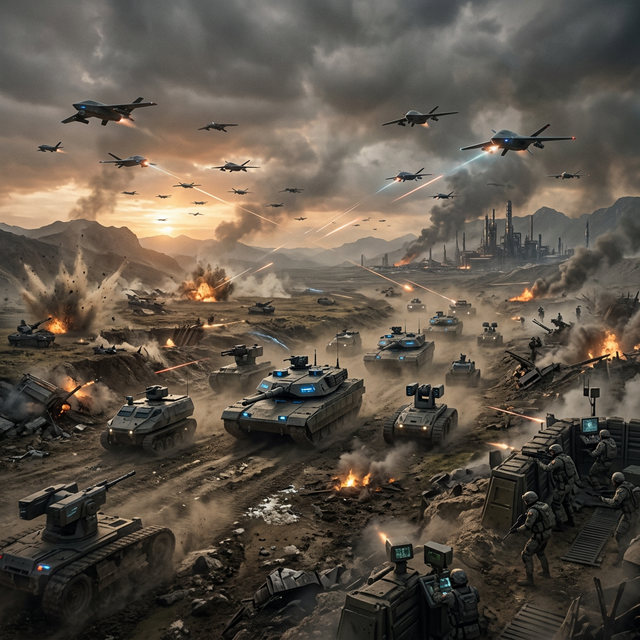
This article explores the role of AI in modern warfare, how drones and intelligent systems are used in current conflicts, and what the future of AI-driven warfare may look like.
The Evolution of Warfare: From Gunpowder to Artificial Intelligence
Throughout history, every major technological breakthrough has changed the nature of war. The invention of gunpowder introduced firearms and cannons. Industrialization enabled tanks, aircraft, and mechanized armies. The nuclear age introduced weapons capable of destroying entire cities.
Now, the world is entering the age of algorithmic warfare, where decisions, targeting, and battlefield intelligence can be partially automated using AI systems.
Artificial intelligence can process vast amounts of data—from satellites, drones, radar systems, and electronic signals—much faster than humans. Military analysts believe that AI can significantly accelerate battlefield decision-making and provide strategic advantages during conflicts.
For example, AI-driven software can analyze thousands of surveillance images and identify enemy equipment, missile launchers, or troop movements in seconds.
AI in Contemporary Military Tensions
Recent military operations demonstrate how AI and drone technology are already integrated into modern warfare. Reports indicate that the U.S. military has used AI-supported systems during strikes to analyze intelligence data and plan operations, enabling small teams to perform tasks that previously required thousands of personnel.
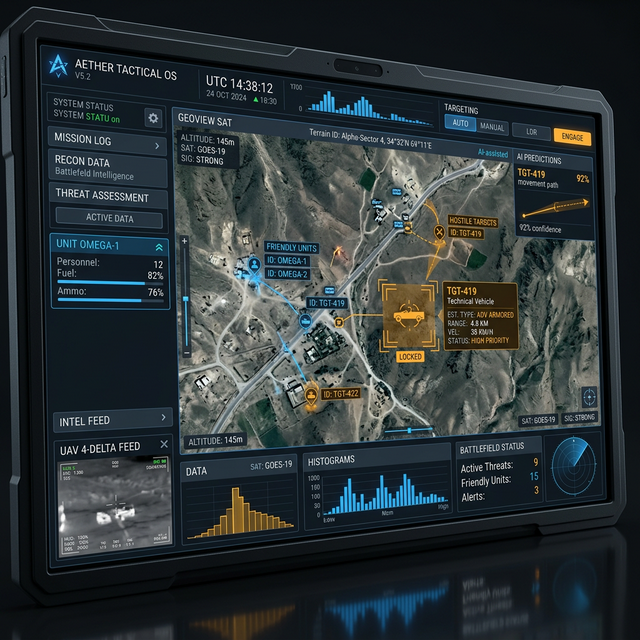
In addition to AI analysis tools, the deployment of low-cost “suicide drones” reflects a growing military doctrine called "affordable mass." Instead of relying solely on expensive fighter jets and missiles, militaries can deploy hundreds of cheaper drones simultaneously to overwhelm enemy defenses.
Drone Warfare: The Most Visible AI Weapon
Unmanned aerial vehicles (UAVs), commonly known as drones, are perhaps the most important military technology shaped by AI. Modern drones can perform several tasks:
- Intelligence gathering
- Surveillance and reconnaissance
- Target identification
- Precision strikes
- Electronic warfare
Some drones now include AI systems that allow them to navigate without GPS, recognize targets, and operate in electronic warfare environments even when signals are jammed.
Lessons from Global Conflicts
The Russia-Ukraine war has become one of the most technologically innovative conflicts in recent history. Both sides have used drones extensively for surveillance, targeting, and attacks. Ukraine has developed several low-cost drone systems capable of destroying tanks and artillery worth millions of dollars.
The conflict has demonstrated that cheap drones combined with AI can significantly influence battlefield outcomes. These innovations are being studied by NATO countries to integrate similar systems into their own defense industries.
Similarly, the conflict in Gaza has highlighted the increasing role of AI in analyzing intelligence data from satellite imagery and intercepted communications to identify potential targets with unprecedented speed.
The Rise of Drone Swarms
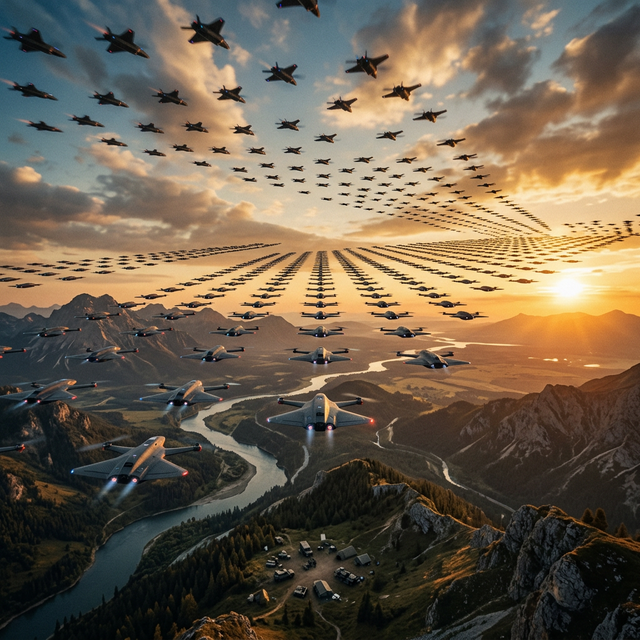
One of the most important future developments in AI warfare is the concept of drone swarms. This involves large groups of autonomous drones working together using AI algorithms. These drones communicate with each other and coordinate their actions in real time.
AI-driven swarm systems could perform missions such as:
- Destroying enemy radar systems
- Conducting large-scale surveillance
- Attacking military bases
- Overwhelming air defenses
Ethical Concerns and the Future
Despite its advantages, AI in warfare raises serious ethical and political concerns:
- Autonomous Weapons: Fully autonomous weapons may be able to select and attack targets without human approval.
- Accountability: If an AI system makes a mistake, determining responsibility becomes difficult.
- Escalation Risks: AI can make decisions much faster than humans, potentially leading to rapid escalation.
As we look toward the next two decades, we may see robot soldiers, fully autonomous battle systems, and AI-assisted command centers becoming commonplace.
Frequently Asked Questions (FAQ)
Will AI replace human soldiers?
AI is unlikely to completely replace human soldiers but will augment them with advanced tools and automation.
Which countries lead in military AI?
The United States, China, Russia, Israel, and several NATO countries are leading the development of military AI technologies.
Are AI weapons already used in war?
Yes. AI-assisted intelligence systems, autonomous drones, and automated defense systems are already used in several conflicts today.
What is the biggest risk of AI warfare?
The biggest risks include autonomous weapons making lethal decisions without human control and rapid escalation of conflicts.