Old vs New Tax Regime (2026): Which Should You Choose?

Old vs New Tax Regime (2026): Which Should You Choose?
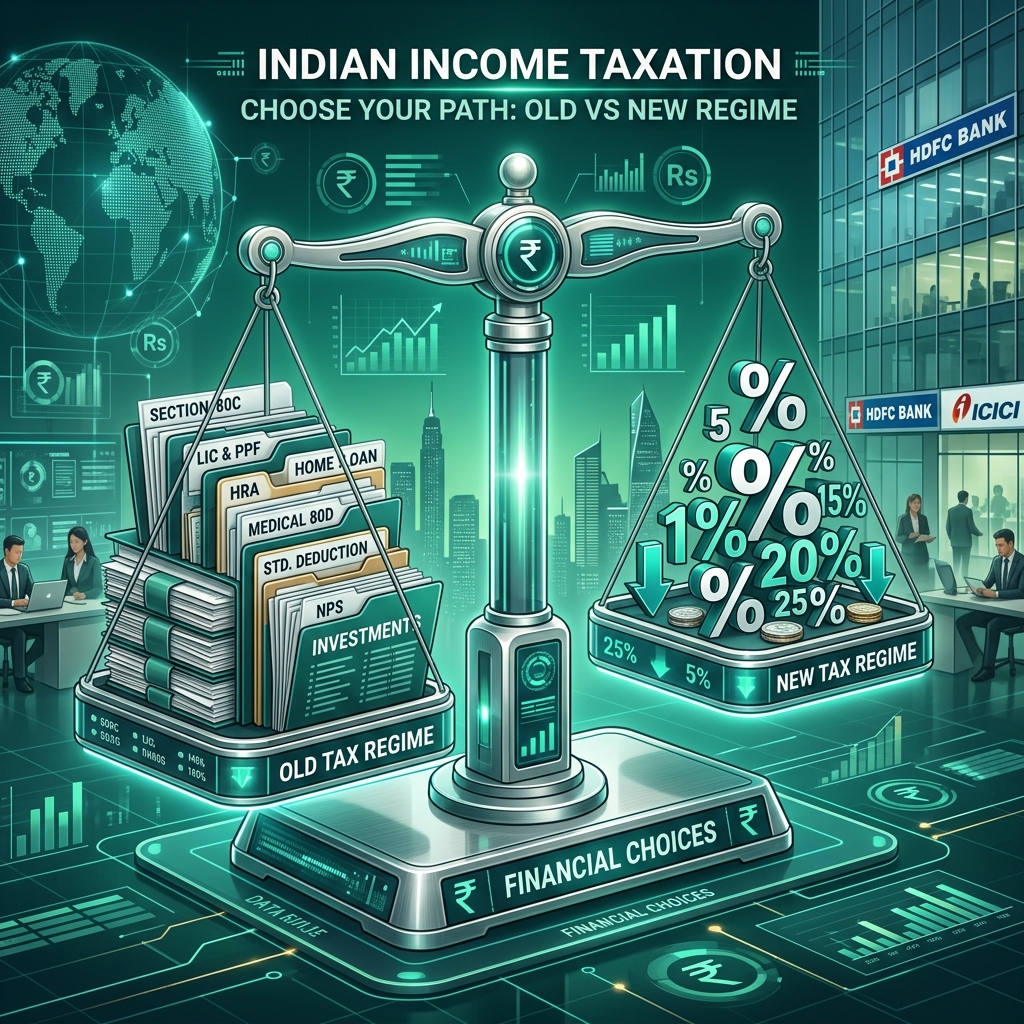
Filing your income tax return in India comes with a major choice: Should you stick to the Old Tax Regime with its familiar deductions, or switch to the streamlined New Tax Regime with lower tax rates?
Choosing the wrong regime can cost you tens of thousands of rupees. In this guide, we’ll do a side-by-side comparison to help you make an informed decision for the upcoming financial year.
📜 The Old Tax Regime: Better for Aggressive Savers
The Old regime has higher tax slab rates but allows you to claim over 70 different exemptions and deductions.
It is designed to encourage saving behavior. If you actively invest in ELSS, PPF, health insurance, and pay rent or a home loan, this regime often saves you more money.
Key Deductions Available:
- Section 80C (Life Insurance, PPF, ELSS, EPF, etc.) up to ₹1.5 Lakh.
- Section 80D (Health Insurance Premium).
- Section 24b (Home Loan Interest) up to ₹2 Lakh.
- HRA (House Rent Allowance) & LTA (Leave Travel Allowance).
Verdict: Switch to the old regime ONLY if your total eligible deductions exceed ₹3.75 Lakhs.
🚀 The New Tax Regime: Better for High Spenders & Simplicity
The New Tax Regime (which is now the default regime portal) offers significantly lower tax slab rates. However, the catch is that you must forfeit almost all major exemptions and deductions.
What You Lose: No 80C, no HRA, no LTA, and no home loan interest deduction (on self-occupied property).
What You Keep: You still get the Standard Deduction of ₹50,000 (for salaried employees) and the rebate under Section 87A, making income up to ₹7 Lakh effectively tax-free!
Verdict: Choose the new regime if you don’t have home loans, don't pay rent, or prefer spending/investing your money outside of the rigid 80C instruments.
⚖️ The Breakeven Point
Calculating which regime is better depends entirely on your specific salary and investment portfolio. However, a general rule of thumb is the breakeven point.
If you earn over ₹15 Lakhs per year, you need to claim more than ₹3.75 Lakhs in deductions for the Old Regime to be beneficial. If your deductions fall below that number, the New Regime is mathematically superior.
🧮 How to Know for Sure
The easiest way to decide is to run your exact numbers through a dual-regime calculator.
Don't guess with your hard-earned money. Use the SUDTCore Income Tax Calculator to compare both regimes side-by-side instantly. Just input your salary and deductions, and the calculator will highlight exactly which regime minimizes your tax liability!
Ready to try it yourself?
Apply the concepts from this guide immediately using our free, client-side finance tools.
Open Tool